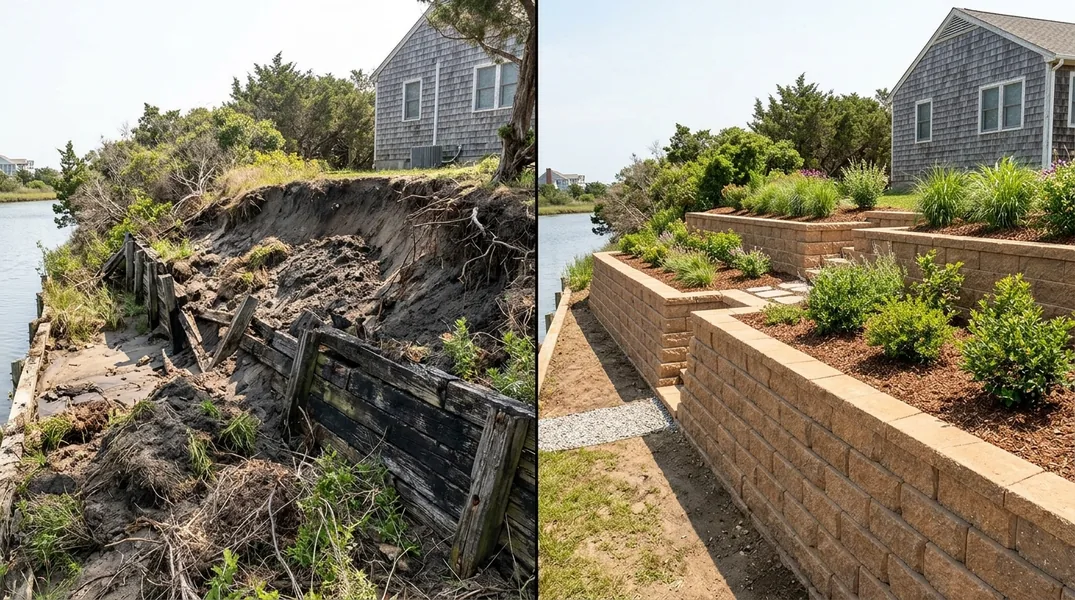
Why Virginia Beach Retaining Walls Face Unique Storm Threats
Living in Virginia Beach means enjoying the beauty of the coast, but it also means preparing for some of the most intense weather patterns on the East Coast. Hurricane season runs from June through November, and nor'easters can strike anytime from fall through early spring. These storms bring torrential rain, often dumping several inches in a matter of hours. When that water has nowhere to go, it saturates the soil behind your retaining wall, turning what should be a stable structure into a ticking time bomb.
Most homeowners never think about what happens to the ground behind their wall until they see bulging, cracking, or leaning. By then, the damage has already begun. The key to protecting your investment is understanding how water behaves underground and why proper Retaining Wall Installation always includes a drainage plan. Without one, even the strongest wall is vulnerable to the forces that hurricanes and nor'easters unleash.
The Silent Killer: Hydrostatic Pressure and Your Retaining Wall
When rain falls, it seeps into the soil behind your retaining wall. In a well-drained system, that water flows through the backfill and exits through weep holes or a drain pipe. But when drainage is inadequate, water accumulates. The soil becomes heavy and saturated, and the water itself exerts a tremendous force against the back of the wall. This is called hydrostatic pressure, and it is the number one cause of retaining wall failure in coastal Virginia.
Hydrostatic pressure does not just push evenly. It seeks the path of least resistance, which often means forcing its way through cracks, joints, and mortar. Over time, this pressure can cause the wall to bow outward, shift forward, or even collapse entirely. A wall that looked perfectly fine before a storm can fail suddenly after a nor'easter because the pressure built up beyond what the structure was designed to handle. This is why Retaining Wall Repair often begins with addressing drainage, not just patching visible damage.
How a Retaining Wall French Drain Saves Your Wall
The most effective solution for managing water behind a retaining wall is a retaining wall french drain. This system consists of a perforated pipe wrapped in filter fabric and surrounded by gravel, installed at the base of the wall behind the backfill. As water enters the soil, it flows through the gravel, into the pipe, and away from the wall to a safe discharge point. This prevents water from pooling and keeps hydrostatic pressure at bay.
During a hurricane or nor'easter, a properly designed French drain can mean the difference between a wall that stands strong and one that requires complete Retaining Wall Replacement. It is important to note that not all French drains are created equal. The pipe must be sized correctly for the wall height and soil type, and the discharge point must be carefully chosen to avoid creating new problems elsewhere on your property. In Chesapeake and other nearby areas with heavy clay soils, drainage design requires extra attention because water moves slowly through clay.
Warning Signs Your Retaining Wall Drainage Is Failing
Homeowners often miss the early warning signs of drainage failure because they appear gradually. Look for soil erosion at the base of the wall, water stains on the wall face, or a white powdery substance called efflorescence that indicates water is moving through the concrete or masonry. You may also notice that the wall is starting to lean or that gaps are opening between blocks. After a heavy rain, check for standing water behind the wall or soggy patches in the lawn above it.
If you see any of these signs, do not wait for the next storm to make things worse. A professional inspection can determine whether your wall needs a new drainage system, targeted repairs, or a full replacement. Ignoring the problem almost always leads to higher costs later. If you are unsure whether your wall is at risk, reaching out for a free estimate is a smart first step.
Retaining Wall Installation Near Me: When to Call a Pro
If your retaining wall is showing signs of storm damage or you are planning a new wall, hiring a local expert is essential. Coastal Virginia's soil conditions, combined with the frequency of severe weather, require a drainage design that is tailored to your specific property. A contractor who understands the local climate will know how to calculate the right pipe size, gravel volume, and discharge location to handle the water volume from a major storm.
When searching for retaining wall installation near me, look for a company that specializes in Concrete Retaining Walls and has experience with drainage systems. Ask about their approach to retaining wall drainage and whether they include a French drain in every installation. A reputable contractor will be happy to explain the process and show you examples of past work. For homeowners in Norfolk and Portsmouth, the same principles apply: proper drainage is not optional, it is the foundation of a long-lasting wall.
Protect Your Investment Before the Next Storm
Hurricane season and nor'easters are a fact of life in Virginia Beach. You cannot control the weather, but you can control how your retaining wall is designed and maintained. By ensuring your wall has a proper retaining wall french drain and by addressing small issues before they become big ones, you can avoid the devastating effects of hydrostatic pressure. A well-built wall with good drainage will stand up to the worst storms and keep your property safe and beautiful for years to come.
Do not wait until you see cracks or leaning to take action. Call Virginia Beach Retaining Wall at (757) 579-1955 to schedule an inspection or to discuss pricing for a new drainage system or wall installation. Protect your home and your landscape from the next big storm.
Looking for a professional retaining wall contractor in Virginia Beach? Virginia Beach Retaining Wall responds fast for all your retaining wall needs.
Get a Free QuoteOur services: Retaining Wall Installation · Retaining Wall Repair · Retaining Wall Replacement