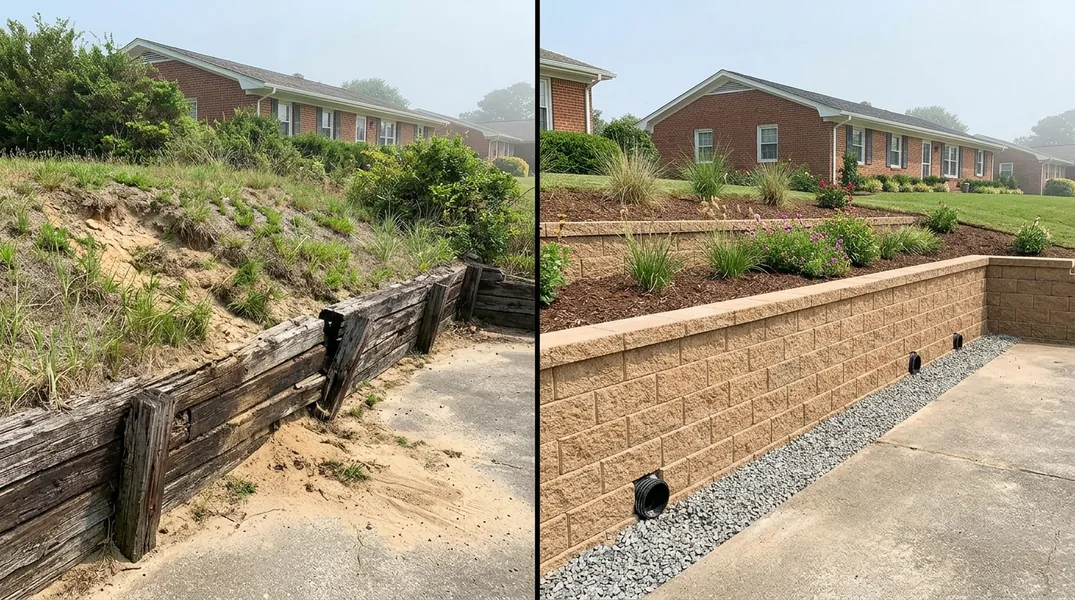
Why Retaining Walls in Hampton Roads Start to Lean
A leaning retaining wall is one of the most common and most urgent problems homeowners face in this region. The cause usually comes down to water and soil pressure. Hampton Roads sits on a mix of sandy soils, clay, and a water table that stays high after heavy rain. When water cannot drain away from behind a wall, it saturates the backfill and adds enormous weight. Over time, that pressure pushes the wall forward, and the structure begins to tilt.
Another frequent culprit is poor original construction. Walls built without proper footing depth, adequate drainage gravel, or weep holes tend to fail faster in our climate. Tree roots can also heave sections upward, and older timber or block walls simply reach the end of their service life. If you live near the water in Virginia Beach, the combination of storm surge, tidal movement, and saturated soil makes wall movement especially common. Recognizing the cause early is the first step toward deciding whether Retaining Wall Repair is enough or whether a full rebuild is the better path.
Signs Your Leaning Wall Needs Retaining Wall Crack Repair or Replacement
Not every lean means the wall is doomed. A slight tilt of an inch or two over many years may be stable enough to monitor. But certain warning signs point to structural failure that will only get worse. Look for stair-step cracks in block walls, wide vertical cracks in concrete, bulging sections, soil washing out from the base, or a wall that has moved noticeably in a single season. If a wall is leaning more than a few inches or you can see daylight through gaps, it is time for a professional assessment.
Crack repair is often viable when the damage is localized and the wall is otherwise sound. Contractors can inject cracks, reset individual blocks, and improve drainage to relieve pressure. However, when the footing has failed or the wall has rotated as a unit, patching is a temporary fix at best. In those cases, Retaining Wall Replacement is the safer and more cost-effective choice. A leaning wall near a driveway, patio, or foundation poses a real safety risk, so do not delay an inspection if you notice movement.
Repair or Replace: How to Make the Call
The decision usually comes down to three factors: the extent of movement, the age and material of the wall, and what the wall protects. A small garden wall that has settled slightly is a good candidate for repair. A tall wall holding up a parking pad or supporting a slope above a home needs a much more conservative approach. Materials matter too. Older timber walls in Chesapeake and throughout the region often rot from the inside out, and patching them rarely lasts. Segmental block and Concrete Retaining Walls can often be repaired if the footing is intact.
A qualified contractor will evaluate the wall's height, the soil conditions, and the drainage behind it before recommending a path. Sometimes the smartest move is to rebuild the wall with a better drainage system and a deeper footing so the same problem does not return. If you are unsure which option fits your situation, a professional inspection is worth the time. You can request a free estimate to get a clear recommendation and understand your options before committing to any work.
Retaining Wall Replacement Near Me: When to Call a Pro
Some wall problems are clearly beyond a homeowner's weekend project. If the wall is taller than about three feet, if it supports a structure or driveway, or if it shows signs of active collapse, call a professional. Attempting to dig out and rebuild a failed wall yourself can be dangerous, and improper backfill or drainage will cause the new wall to fail just as fast. Local crews understand the soil and water conditions here, which makes a real difference in how long the repair lasts.
When you search for retaining wall replacement near me in Norfolk or the surrounding area, look for a contractor who evaluates drainage and soil, not just the visible wall. Ask how they handle water management, what materials they recommend for our climate, and whether they pull the proper permits. A good installer will explain why the original wall failed and how the new one will be built to avoid the same outcome. That conversation is often the best indicator of quality.
What Retaining Wall Repair or Replacement Costs in Virginia Beach
Homeowners often ask whether repair or replacement is cheaper. The honest answer is that it depends on the damage. Minor crack repair and drainage improvements usually cost far less than a full rebuild, but if the wall has already failed structurally, spending money on patches can end up costing more over time. A replacement wall built with proper drainage and a solid footing is a long-term investment that protects your landscape and your home.
Several factors affect the final number: wall height and length, material choice, site access, and how much excavation is required. A short garden wall is a very different project from a tall structural wall holding back a slope. Because every yard is different, the most reliable way to budget is to get a written quote based on an on-site inspection. You can review general pricing guidance online, then call (757) 579-1955 to discuss your specific wall and schedule an assessment. Virginia Beach Retaining Wall serves homeowners throughout the area and can help you decide whether repair or replacement is the right call.
Looking for a professional retaining wall contractor in Virginia Beach? Virginia Beach Retaining Wall responds fast for all your retaining wall needs.
Get a Free QuoteOur services: Retaining Wall Installation · Retaining Wall Repair · Retaining Wall Replacement